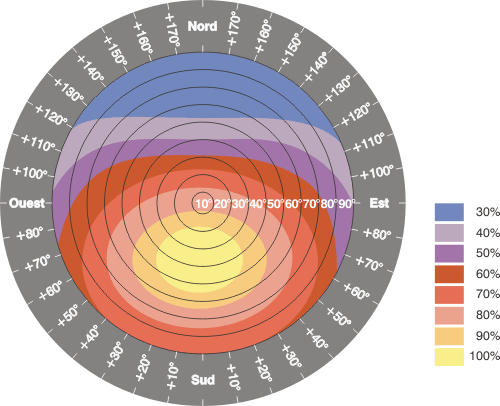
Solar energy is one of the energy and environmental solutions of the future.
Either solar thermal (in the form of heat) to heat water (domestic or heating), or solar in the form of light (photons), i.e. photovoltaics to produce electricity (the miracle of silicon and photons).
Solar thermal energy is widely used in hot countries such as Croatia, Israel, Egypt, Turkey and China. Practical, not very elegant and cost-effective, it's a solution that should always be considered. The Grasse hospital has a very fine solar thermal installation: water is circulated through black tubes, sometimes under vacuum, and the heat is recovered in the water heater.
Photovoltaic solar energy has benefited from enormous productivity gains over the past 20 years. The price has been divided by 10. As we consume more and more electricity (heat pumps, electric/hybrid cars, household equipment), it's an intelligent match. Solar power is less expensive than all other forms of energy in our PACA/South region. But, of course, there's no sun at night, or even for a few days. There's less sun in winter than in summer, even though electricity consumption is sometimes higher in winter (depending on the heating & air-conditioning system, the swimming pool, etc.).
A photovoltaic system consists of solar panels (approx. 2m² each for a maximum of just over 400W - so 8 panels for 3kW is basic, 20 panels for 9 kW is comfortable), an inverter (as the panels generate direct current, while the house uses alternating current) and safety boxes for connection. It's simple, very reliable, robust and safe, and electricity production is well known over the lifetime of the system. You can also add batteries for use at night or on cloudy days.
Life expectancy is over 25 years. Worry-free. Solar panels contain no rare earths. They are 97% recyclable. (To be honest, it's a bit more complicated with batteries, but they're optional, so you can use EDF at night). In short, there are nothing but advantages. In terms of installation costs, the panels represent only 20% of the final cost, the bulk of which is French work (installation, connection, roofer, electrician, electrical panel...); it's at least as domestic as other energies.
Finally, it's profitable in our region (yes, we have twice as much sun as in the north). 8 years or thereabouts. less with subsidies. and it tempers EDF's electricity inflation... so high in 2023 (+25%) which will continue (and even if I'm a nuclear fanatic, I'm not sure that Flamanville 3, the EPR, will lower the bill, quite the contrary....).